
Heart Restart: Paediatric First Aid & CPR Training
A personalised program for parents, siblings, grandparents, and caregivers
Learn Today. Save Tomorrow.
When a medical emergency happens, the first few minutes matter most, especially when it’s a baby or child.
Our course is designed to help everyday caregivers feel prepared, not panicked. We replace fear with practical, easy-to-follow, life-saving skills so you can step in with confidence when a infant or child needs you.
You’ll gain the knowledge, reassurance, and hands-on experience to respond calmly and effectively in an emergency.
Because what you do in those critical moments can truly make a life-changing difference.
-
We understand that life is busy, so we offer flexible training options to suit your schedule and comfort.
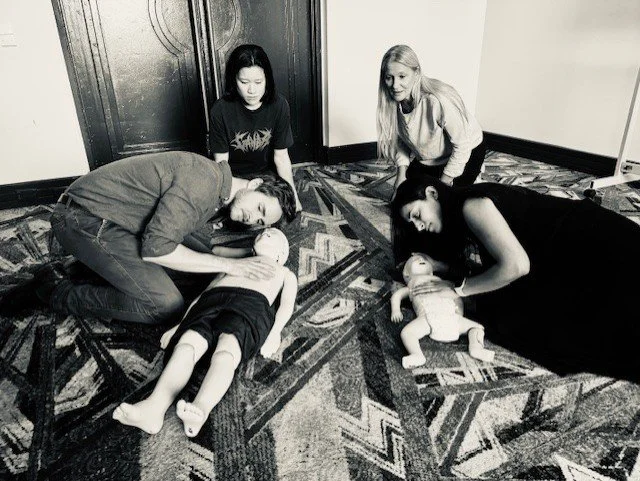
Face-to-Face Training: Enjoy hands-on, practical learning with experienced trainers, either in your own home or at a venue provided by Heart Restart
Online Program: Learn at your own pace from the comfort of your home with our comprehensive digital modules
Our goal is to make learning accessible, convenient, and tailored to you.
-
Duration: 3.5 - 4 hours
Price: $135 per person
Eligibility: Participants should be physically able to perform 2 minutes of continuous CPR on a manikin
Our sessions are designed to be hands-on, supportive, and suitable for parents and caregivers of all experience levels.
Certification: Upon successful completion, you will receive a Certificate of Attendance.
What you will learn …
-
In a life-threatening emergency, knowing what to do in those first few minutes can save an infant or child’s life.
In this section, you’ll learn how to:
Perform CPR for infants and children
Use a defibrillator (AED) with confidence
We break down these critical skills into simple, step-by-step actions so you can stay calm, act quickly, and provide life-saving care when it matters most.
-
Breathing problems can become serious very quickly, especially in young children. Knowing what to look for can help you act early and keep your child safe.
In this section, you’ll learn how to:
Recognise increased “work of breathing” (signs your child is struggling to breathe)
Identify red flags for asthma and croup
Respond quickly and appropriately in an emergency
Know when to seek urgent medical help
We provide simple, practical guidance so you feel confident recognising breathing concerns and taking action when it matters most.
-
Fevers are common in children, but they can sometimes be frightening, especially if a seizure occurs. Knowing what to do can help you stay calm and keep your child safe.
In this section, you’ll learn how to:
Safely manage a fever and keep your child comfortable
Recognise the signs of a febrile convulsion (fever-related seizure)
Respond calmly and safely during a seizure
Know when to seek medical help
We focus on simple, reassuring guidance so you feel confident caring for your child when they’re unwell.
-
Allergic reactions can range from mild to life-threatening. Knowing the signs and how to respond quickly can make all the difference.
In this section, you’ll learn how to:
Recognise mild and severe allergic reactions
Identify the signs of anaphylaxis (a life-threatening reaction)
Respond quickly and safely, including how to use an EpiPen
Know when to seek urgent medical help
We provide simple, practical guidance so you feel confident protecting your child in an emergency.
-
Choking can happen quickly and without warning. Knowing what to look for and how to respond can save a life.
In this section, you’ll learn how to:
Recognise the signs of choking in infants and children
Respond quickly and safely using age-appropriate first aid techniques
Stay calm and act with confidence in an emergency
-
When your child is unwell, it can be hard to know what’s serious and what can wait. We help you recognise the warning signs early and respond with confidence.
In this section, you’ll learn how to identify and manage:
Breathing difficulties (respiratory distress)
Early signs of serious infections, including sepsis
Rashes that may need urgent attention
Fever and how to manage it safely
Febrile convulsions (fever-related seizures)
Our focus is on simple, practical guidance to help you stay calm, make informed decisions, and know when to seek medical help.
-
Accidents can happen in an instant — knowing how to respond can make all the difference.
In this section, you’ll learn how to recognise and manage common injuries, including:
Understanding how an injury happened (mechanism of injury) and why it matters
Controlling bleeding quickly and effectively
Recognising and responding to head injuries
Managing broken bones and sprains
Providing first aid for burns
We focus on simple, practical steps to help you stay calm and take action with confidence when your child is hurt.
-
Accidents can happen quickly, especially around the home. Knowing what to do in the first few minutes can make a big difference.
-
As a parent or caregiver, nothing matters more than keeping your child safe.
That’s why we focus on giving you the skills and confidence to act quickly when it counts.We don’t just teach theory — we share practical, real-world knowledge in a way that’s simple, clear, and easy to remember, even in stressful moments.
Our goal is to help you feel calm, capable, and ready to step in when your child needs you most.
Confidence comes from competence, give every child the best chance by being prepared.
-
Email: contact@heartrestart.com.au
Phone: 0420 307 560
-
We understand that life happens, but to keep our classes small and effective, we adhere to the following:
Refund Eligibility: You must notify Heart Restart at least 5 business days before your course begins.
Late Cancellations: Refunds will not be issued for cancellations made less than 5 business days prior to the course start date.